

About 3% of the population in Hong Kong suffers from scoliosis, and most of the patients are teenagers aged 10 to 15. Since scoliosis will bring many sequelae, it must be discovered early and treated early. The latest EOS scoliosis examination technology introduced in Hong Kong has a lower radiation dose than traditional X-rays, and the examination time is very fast, helping doctors more accurately diagnose scoliosis patients.
Radiology specialist Dr. Shum Sing Fai, John pointed out that EOS "standing whole-body weight-bearing X-ray scan" is an X-ray technology from France that can take pictures of the patient's front and side at the same time. The received data is analyzed by the software, turning the 2D data into 3D data, presenting the patient's whole body skeletal status three-dimensionally. The medical team can fully understand the patient's scoliosis, including whether there are abnormalities in the hip and lower knee joints that cause scoliosis. This one-stop specialized examination technology for diagnosing scoliosis is highly regarded.
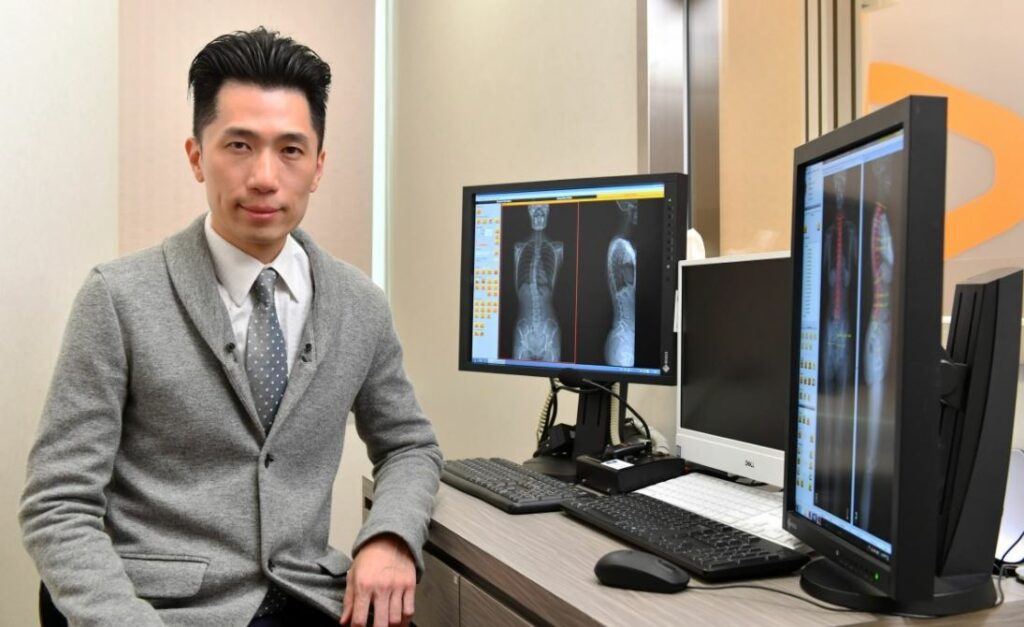
EOS Vs traditional inspection
EOS is also an X-ray receiving instrument that won the Nobel Prize in Physics in 1992. It is very sensitive to X-rays and only requires 10% to 40% of the normal dose of 2D X-rays to achieve the same effect, making it safer for developing children. The patient is in a natural weight-bearing standing position during the EOS examination, and the doctor can understand whether the patient's standing posture is related to scoliosis.
Other examinations, such asCT scanandMRI, require the patient to complete the examination in a lying position, so they do not fully reflect the actual situation when the patient is standing. Without knowing the source of the problem in the first place, it is difficult for the medical team treating the patient to determine whether to treat the scoliosis first, or the hip joint or lower knee joint first. These are limitations of traditional examinations.
It only takes 7 seconds to get the result
Dr. Shum pointed out that EOS also has a great advantage. It only takes 7 seconds to take a picture of the spine, and it only takes 10 seconds more to take a picture of the lower limbs. The entire examination time is three times faster than traditional 2D X-rays. As for the magnetic resonance examination, which takes half an hour and cannot take a picture of the whole body, EOS can clearly show the spine, hip and knee joints.
Scoliosis is classified into mild, moderate and severe conditions. In developing children, scoliosis develops quickly and must be closely monitored. "Generally speaking, patients with moderate and severe scoliosis need to be monitored every 4 to 6 months. If traditional X-ray examination is used, patients will be exposed to a high amount of radiation throughout their lives. Radiation has a negative impact on breast tissue. Little girls with scoliosis should pay special attention."
The radiation dose of EOS is 60% to 90% lower than that of 2D X-ray examination, making it quite suitable as a method for long-term monitoring of scoliosis.
The radiation dose of EOS is 60% to 90% lower than that of 2D X-ray examination, making it quite suitable as a low-radiationscoliosis X-ray examinationmethod for long-term monitoring.
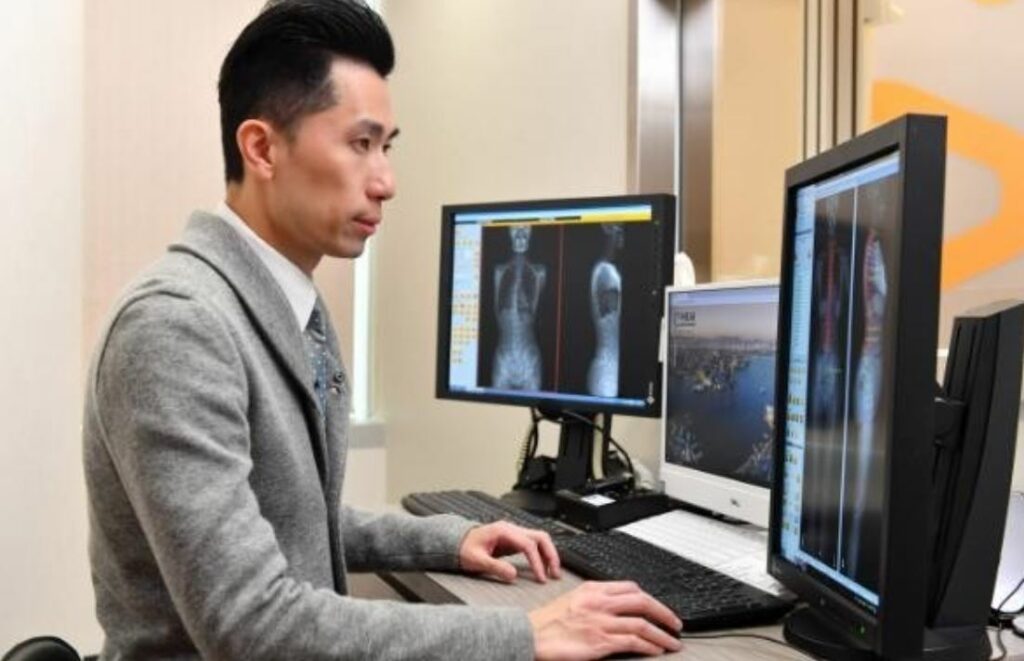
Mastering various data can help formulate treatment plans
Dr. Shum said that the medical team obtained a lot of important information from EOS, which helps to formulate the best treatment plan for the patient. "The 3D data can calculate the course of treatment and the angle of adjustment. The degree of spinal displacement can also be known. The displacement direction of the pelvis can be understood. The conditions of the hip and knee joints and whether there are long or short feet are all clearly understood."
Some adolescent and adult patients with scoliosis have hip and knee joint problems. Some American orthopedic surgeons recommend that before providing patients with hip joint treatment, they should find out whether the patient's hip joint problem is related to scoliosis. This approach hopes to achieve the therapeutic effect of treating both the symptoms and the root cause.
Why does scoliosis occur? Dr. Shum explained that the cause of this disease can be unknown, congenital, or scoliosis caused by bone or nerve problems, or even related to asymmetry of the pelvis on both sides, such as one side of the pelvis being smaller. Scoliosis causes pressure on the patient's heart and lungs, affecting cardiopulmonary function. Scoliosis causes uneven pressure points on the body, and patients may suffer from a variety of pain, especially back pain and hip pain, which are obvious symptoms of scoliosis. If parents suspect that their child has scoliosis, they should contact the doctor as soon as possible to assess whether it is necessary to arrange for the child to receive an EOS evaluation as soon as possible.
EOS technology has a history of more than 10 years and was first used in European and American countries. In recent years, private laboratory clinics in Hong Kong have introduced EOS to serve the public. Citizens in need may wish to seek help as soon as possible so that the problem of scoliosis can be solved as soon as possible.