



Girls said they were worried about breast cancer, ovarian cancer or other invasive diseases and were buried, but many people only hid the word Body Check around their mouths, and it did not work. This time, CosmoBody asked Yu Zhihui, a specialist in radiology, to introduce to you four must-do body inspections and knowledge for women. If you have never tried a body inspection and want to experience your body for the first time, you must pay attention to the following information first.
1. Mammography examination: a must-do to prevent breast cancer!

The purpose of regular mammography examinations for women is to detect early-stage breast cancer and reduce the risk of late-stage breast cancer. Many early-stage cancers have no symptoms at all. By the time symptoms appear, such as lumps, pain or inverted nipples, it may be too late, or the cancer may have spread to other places.


One of the most comprehensive mammography examinations includes breast ultrasound and mammography.
Mammography: It can detect four conditions: mass, microcalcification, architectural distorion and focal asymmetry. The latter three conditions are difficult to assess using breast ultrasound.
Breast ultrasound: It does not have any radiation effects on the body and can be done every two years. Generally, the density of breast tissue in Asian women is relatively high, especially in younger women. The denser the breast tissue, the less accurateMammographywill be in detecting breast cancer. Therefore, this group of women is particularly suitable for breast ultrasound to rule out abnormal breast lumps.

Women aged 30 to 40 years old: In the absence of a family history of breast cancer or clinical symptoms of breast cancer, you may choose to have only a breast ultrasound examination, because mammography involves radiation.
40-year-old women: The Hong Kong Breast Cancer Foundation recommends that women undergo mammography and ultrasound examinations every 2 years starting from the age of 40. Women over 40 have a higher chance of developing breast cancer than women aged 30 to 40, so mammograms are necessary even if they involve a small amount of radiation.
2. Pelvic ultrasound: a must-do to prevent ovarian cancer!

Women over 40 years old should also start paying attention to ovarian cancer. It is the sixth most common cancer among women in Hong Kong, with more than 500 new cases every year. The average patient age is 51 years (rarely before 40 years old). A woman has about a 1 in 111 chance of developing ovarian cancer in her lifetime. The symptoms of early stage ovarian cancer are not obvious.

Women over 40 years old should pay more attention and undergo relevant examinations if they continue to experience abdominal discomfort or bloating. Sick people may mistake symptoms for stomach pain or indigestion and take it lightly. Drawing blood for the cancer indicator CA125 test and intracavity ultrasound examination can help detect lesions. Only about 50% of people with stage 1 ovarian cancer show abnormal cancer marker CA125. Therefore, pelvic ultrasound, as a structural examination, plays an indispensable role in detecting early-stage ovarian cancer.
3. Whole-body imaging diagnostic examination: a must-do to prevent lung cancer/hidden diseases!
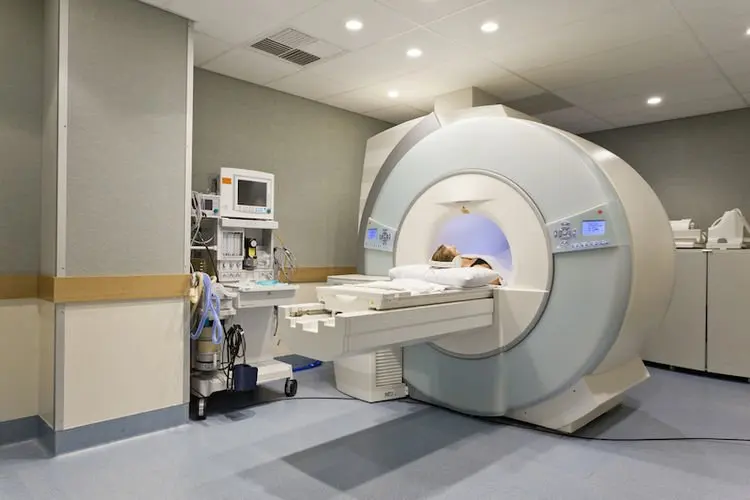
If you want to do a full-body examination, it is recommended to choose some tomography scans without radiation, such as whole-body magnetic resonance scans. Whole-body MRI scans can detect hidden diseases lurking in the human body, including brain tumors, pancreatic tumors, lung nodules, colorectal lesions, prostatic hypertrophy, gynecological and head and neck problems, stroke, cerebral hemangioma, renal hemangioma, dry bones, cervical and lumbar degeneration and other problems.

According to statistics from a local clinic, 30 to 33% of 115 asymptomatic people who underwent whole-body MRI examinations were classified as having tumors or suspected tumors requiring continued follow-up after tomography scans. The average age of these 115 people is 51 years old, and 71 of them are women. This shows the importance of performing a whole-body MRI scan.

Women over 50 years old: The incidence of cancer increases with age, especially for people over 50 years old. People in this group may consider a full-body MRI scan every 2 to 3 years if they have no special symptoms. If a whole-body MRI scan is performed,a pelvic ultrasoundis not required. Because MRI scans can accurately and accurately detect abnormal masses on the ovaries.
Magnetic resonance scans are less sensitive than computer scans in detecting early-stage lung cancer or small lung nodules. The chance of developing lung cancer for people over 50 years old increases significantly, so people over 50 years old can consider low-radiation lung computer scanning to detect early lung cancer.
4. Pap smear test: a must-do to prevent cervical cancer!

The various radiological diagnostic examinations mentioned above cannot detect early cell lesions of the cervix. Therefore, after completing the above examinations, women also need to undergo regular Pap smear examinations (also known as Pap smear examinations), and may also consider examinations duringpre-marital physical examinations.
Original link:https://bit.ly/3RLY9xQ