



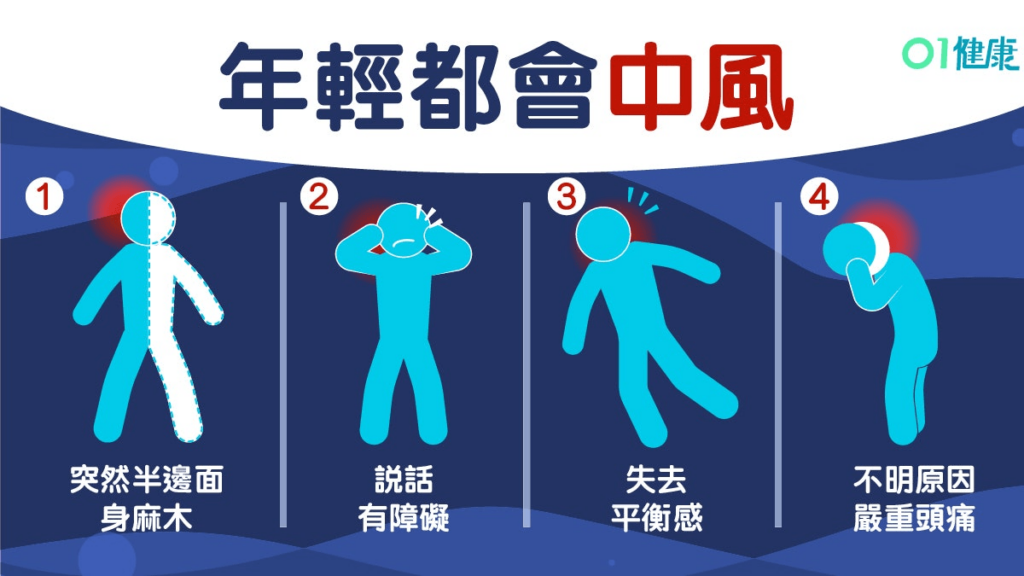
Most people know that Zhongfeng is a "big thing", but the understanding of Zhongfeng is only limited to this. Especially Zhongfeng is always regarded as an elderly person. Why should we worry about being young? In fact, the wind has a tendency to turn youthful, and it may be a sign of pain or blurred eyes. If you believe that you are young, you don’t pay attention to problems and you will suffer from future problems at any time. Why do young people get popular? What are the signs of the risk? The following are ten doubts about the trend.
According to data from the Department of Health, an average of more than 3,000 people die from cerebrovascular disease in Hong Kong every year, making it the fourth killer of Hong Kong people. Stroke is the most common cerebrovascular disease. Although the elderly are at high risk for stroke, as stroke patients are usually over 50 years old, figures in recent years also show that the age of onset of stroke is on a downward trend. Even young people should not take it lightly!
Here are1010 questions about stroke that you might want to take a moment to ask:
Q1: What is stroke?
Stroke is an acute cerebrovascular disease. It is mainly caused by an abnormality in the blood supply of the brain and the inability to deliver blood and nutrients to the brain. As a result, brain cells are deprived of oxygen, damaged, and even die. Eventually, they lose their original functions. The body functions controlled by these brain cells also become disrupted.
Q2: What causes stroke?
Stroke can be mainly divided into two categories: ischemic and hemorrhagic, with different causes. More than 70% of strokes fall into the former category:
Ischemic stroke:Caused by embolism in the cerebral blood vessels. It is usually caused by cerebral atherosclerosis, which causes thrombus to form in the cerebral arteries, or the thrombus formed in the heart or carotid artery dissociates into the cerebral blood vessels and blocks the blood flow. It is usually related to "three highs" or some heart diseases (including arrhythmia and coronary heart disease).
Hemorrhagic stroke:caused by burst bleeding of blood vessels in the brain, mostly related to long-term hypertension; or bursting of blood vessels on the surface of brain tissue, mostly related to congenital cerebrovascular disease (such as subarachnoid hemorrhage).
Q3: Do young people all have strokes?
Many people regard stroke as an elderly disease, but there are many causes of stroke, and even young people are not necessarily without risk. Neurosurgery specialist Huang Bingkang said that there are actually many cases of stroke in young people. Some are due to acquired lifestyle habits, some are due to congenital diseases, and some have unknown causes. The following are some of the causes of stroke in young people:
- Three highs:Three highs are common causes of stroke in the elderly. However, it turns out that many strokes in young people are also caused by three highs. In particular, many people have poor living habits, do not eat in moderation, do little exercise, and are overweight. The three highs are gradually becoming younger.
- Vascular lesions:For example, hemangioma, vascular malformation, etc. The causes are often unknown and may occur congenitally or acquired.
- Cerebral blood vessel tear:It may be related to certain pathologies, or it may occur for no reason.
- Carotid artery tear:It may be caused by neck trauma during exercise or improper neck massage.
- Heart problems:Mostly caused by congenital heart leakage (a defect in the membrane between the left and right atria and ventricles), which allows blood clots to flow directly to the brain without being processed by the body, causing blockage.
Doctors emphasized that many of the problems that cause strokes in young people may have no obvious symptoms on weekdays, making it difficult to detect. However, when patients suddenly suffer strokes, it is difficult to prevent them.

Q4: What are the symptoms of a stroke?
The specific circumstances of a stroke and the affected body functions depend on the location and range of affected brain cells. Some common symptoms are as follows:
– Slurred speech or difficulty expressing yourself
– Temporary numbness, weakness, or paralysis of the arms, feet, or face (especially one side)
– Sudden blurred vision or unclear vision in one eye
– Sudden severe headache
– Difficulty in body balance and coordination of hands and feet, or sudden and unexplained collapse
– Unexplained dizziness or fainting
– Incontinence
Q5: Is it likely that you will be permanently disabled after a stroke?
Stroke is so scary not only because it can lead to death, but also because it may bring about a series of sequelae, such as hemiplegia, incontinence, slurred speech, visual disturbance, crooked mouth and eyes, and even coma, which has a permanent impact on the patient's life.
However, according to the Hospital Authority, not all patients will be permanently disabled after a stroke. Recovery is related to the severity of the brain damage, the presence of complications, the patient's condition before the stroke, and subsequent recovery. In fact, more than half of survivors can fully recover their ability to take care of themselves, and less than 20% of patients are severely disabled.
Q6: Will strokes in young people be less severe?
Doctors point out that the severity, sequelae and complications of a stroke are mainly related to the cause and type of the stroke, as well as the location and range of affected brain cells. Being young does not mean that the disease will be milder, and some young patients will be paralyzed for life. However, if the degree of damage is similar, the younger patient's recovery ability is usually better.
Q7: Are there any warning signs before a stroke?
Many patients have no warning signs before a stroke, but some patients will have a "mini-stroke" beforehand, that is, transient cerebral ischemia. The symptoms are similar to those of a stroke, but they generally only last for about 2 to 15 minutes and not more than 24 hours. Previous studies have found that 20 to 30% of patients with minor strokes will suffer more severe strokes in the future, 5% of which occur within a week and 12% within three months; and 15% of patients with severe strokes have had minor strokes.
Q8: Is physical examination reliable for stroke assessment?
Although there may be no warning signs of stroke, and currently there is no instrument that can detect whether a person is about to have a stroke, the possibility of stroke can still be assessed by assessing stroke risk factors such as blood sugar, blood pressure, cholesterol, weight, smoking habits, arrhythmias, and family history of stroke.
However, doctors point out that some risk factors for stroke in young people are indeed difficult to detect through general physical examinations. For example, vascular lesions may need to be discovered through magnetic resonance scanning of cerebral blood vessels, and heart leakage must also be confirmed through cardiac ultrasound. "Although many of these problems can be treated with treatments and drugs, the main prerequisite is to know the problem."
Q9: Can emotional excitement trigger stroke?
Many TV dramas have shown scenes of people being so angry that they "exploded blood vessels" and suffered strokes. If you are unfortunately already at high risk of stroke, or are worried that you will have a stroke, do you really shouldn't be angry?
The doctor answered that not all stroke cases are like this. Most cases of stroke caused by excitement are because the patient has high blood pressure or heart problems. Emotional excitement can make the heart beat faster and increase the burden on the heart, which may trigger hemorrhagic stroke. In fact, strenuous exercise has this risk.
Q10: How can you reduce the risk of stroke?
People of all ages should take precautions against stroke. This is especially important for those with multiple risk factors or a history of stroke. For more information, please refer to the tips provided by the Centre for Health Protection:
– Quit smoking and drinking
– Regular work and rest time
– Keep a calm mind
– Appropriate and consistent exercise
– Avoid eating too many fatty or sweet foods and avoid becoming overweight
– Patients with long-term diseases such as high blood pressure and diabetes should receive regular check-ups and control their conditions
Original link:https://bit.ly/3v6L60j